.jpg)
Physiotherapy at Home: Equipment That Supports Recovery
What a physiotherapist at home needs, which equipment actually speeds recovery, and how to set up the space so exercises can be done safely.
A physiotherapy session at home is only as good as the space it happens in. The most common problem is not the quality of the exercises but the surroundings: a bed that is too low to stand up from, a slippery floor, and nowhere to put the equipment.
Some equipment genuinely accelerates recovery, and some of it is marketing. This guide separates the two.
Setting up the space
A firm, non-slip surface with a clear area roughly two metres by two metres is enough for most rehabilitation exercises.
Remove mats and rugs, move the furniture, and make sure the lighting is good enough for the therapist to see the patient's alignment.
A sturdy chair with armrests, positioned against a wall so it cannot slide, is essential for balance work and for sit-to-stand exercises.
Equipment that genuinely helps
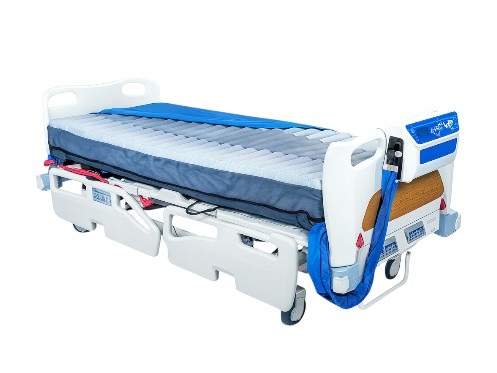
A firm adjustable bed with a raiseable backrest, because most rehabilitation programmes start in bed and the angle matters.
A walker or a pair of forearm crutches sized correctly. Crutches that are the wrong height are worse than no crutches, because they cause shoulder and back pain.
A blood pressure monitor and a pulse oximeter, so the therapist can see the physiological response to effort rather than guessing.
A grab rail set and a shower chair for bathroom safety, which is where most rehabilitation setbacks happen.
Equipment to be careful with
Resistance bands and balance boards are useful, but only once the patient has the strength and balance to use them safely.
Electrical stimulation units are widely used and widely over-sold. The evidence is strongest for muscle re-education after surgery, not for general recovery.
Massage guns and heat therapy devices feel good and have no meaningful role in most rehabilitation programmes.
The oxygen question in rehabilitation
For a patient with a chronic respiratory condition, exercise tolerance is often limited by desaturation rather than by muscle weakness.
A concentrator on rent, used during the session at the prescribed flow, frequently allows a patient to tolerate more therapy than they could without it.
The saturaion trend during exercise is then a useful objective measure of progress, and it guides the prescription.
Making it a routine
Short, frequent sessions work far better than one long session. Fifteen minutes twice a day beats an hour once a week for almost every rehabilitation goal.
Record the exercises, the repetitions and the patient's response. It is the only way to show progress at the next review.
Involve the family member who will be helping. The therapist teaches them the transfers and the home programme, which is where most of the daily work happens.
Frequently asked questions
A firm adjustable bed, a sturdy chair with armrests, correctly sized walking aids, a blood pressure monitor, a pulse oximeter, grab rails and a clear non-slip exercise area.
Often yes, for a patient with a chronic respiratory condition whose exercise tolerance is limited by desaturation. It must be used at the prescribed flow and under the doctor's guidance.
Need help choosing equipment?
Our team can help you select the right machine based on your doctor’s advice, the patient condition and the rental duration. Call +91 92242 82405 and we will talk it through.