DVT Prevention After Surgery: What a Compression Pump Does
Why blood clots form after lower-limb surgery, how a sequential compression device prevents them, and how to use a DVT or lymph pump correctly at home.
Deep vein thrombosis is the clot that forms when blood pools. After hip, knee or ankle surgery, or during any period of immobility, the calf muscle stops pumping blood back towards the heart.
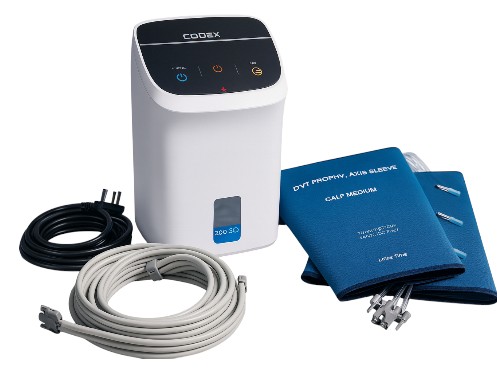
A sequential compression device replaces that pump. Sleeves or boots around the leg inflate in sequence from the ankle upwards, pushing blood back the way walking would.
It is one of the most prescribed pieces of equipment after orthopaedic surgery, and one of the simplest to use once it is set up correctly.
Why clots form after surgery
Three things drive venous clot formation: blood that pools because the calf muscle is not moving, a damaged vein wall from the operation, and blood that is temporarily more clot-prone after any major surgery.
The risk is highest in the first two to six weeks after lower-limb surgery and in patients who cannot mobilise for other reasons.
Compression therapy works on the first mechanism. It does not replace anticoagulants if they have been prescribed, and it does not replace early mobilisation.
How the pump works
The garment is divided into chambers. The control unit inflates them in sequence, ankle first, so blood is pushed upwards rather than pooling.
Pressure is graduated - higher at the ankle, lower towards the thigh - which matches the natural pressure gradient in the leg.
The cycle is usually 60 to 90 seconds and can usually be adjusted. The unit then holds a slow, near-constant pressure for a period if the protocol specifies it.
Getting the fit right
Garments are sized by limb measurement, and we measure at delivery. A loose sleeve does not move the blood; a tight one blocks it and can cause pressure injury.
The limb should be measured at its widest point, and the garment must fit snugly without being painful. If the patient has swelling, the garment may need to be resized as the swelling changes.
The leg should be positioned comfortably, usually slightly elevated, and the garment should be applied before the patient gets up if possible.
How often to use it
Typical protocols are two or three sessions of 30 to 60 minutes a day, often scheduled around physiotherapy. Follow the schedule on the prescription exactly.
Over-use is not harmless. Excessive or prolonged use can cause skin irritation, and compression is contraindicated in some vascular conditions.
If the patient has a new clot, is on blood thinners, or has an active infection, check with the prescribing physician before starting.
DVT pump and lymphedema pump
A DVT pump uses a leg garment with graduated pressure. A lymphedema pump uses an arm or leg garment with a longer, gentler cycle as part of complete decongestive therapy, alongside manual drainage and compression bandaging.
The DVT pump is ₹5,150 per month and the lymph pump ₹6,850 per month, including the garment, delivery, fitting and training.
Frequently asked questions
Most protocols prescribe it for two to six weeks, often for several hours a day at first and then as the patient mobilises. Follow the schedule on your prescription.
Yes. We supply a pair of garments for a bilateral prescription and can add a second sleeve at a reduced rate when only one leg is prescribed.
Need help choosing equipment?
Our team can help you select the right machine based on your doctor’s advice, the patient condition and the rental duration. Call +91 92242 82405 and we will talk it through.