Setting Up Home Care After a Hospital Discharge
The 48-hour checklist that gets a patient home safely: what to arrange before discharge day, what to have ready at home, and the handover questions to ask the hospital.
Most discharge problems are not clinical. They are logistical: the lift is out of order, the oxygen cylinder arrives after the patient does, nobody knows which medications were stopped.
A discharge is a handover between two teams. The hospital team hands over clinical instructions; the home team needs the physical setup to match those instructions.
Here is the sequence that works, starting from the day the discharge is planned.
Before discharge day
Call us with the expected discharge date. We hold stock against a confirmed date and can schedule the delivery slot for the same afternoon.
Ask the hospital for three things in writing: the current medication list with doses and timings, the equipment instructions (flow rate, pressure setting, suction protocol, alarm limits), and the escalation plan with the number to call.
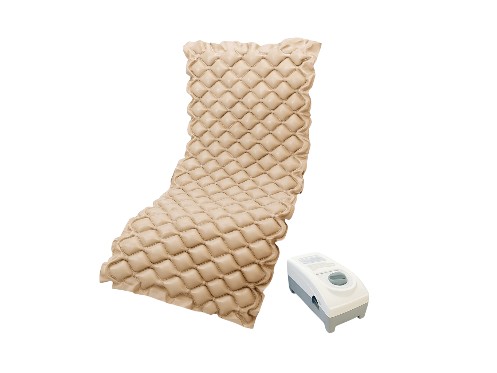
Confirm the patient's weight, because beds and monitors are rated for it and an undersized mattress is a pressure risk.
The day before
Clear the room. Measure the doorway and the lift and tell us if there is a staircase without a landing, because that changes the delivery time.
Confirm the electrical points and the inverter, if one is needed. An oxygen concentrator or a ventilator on a shared unstable line is a common cause of a night-time call-out.
Keep the patient's medicines in one box with a printed schedule. When a relative is also running the household, a single reference point prevents double doses.
On the day
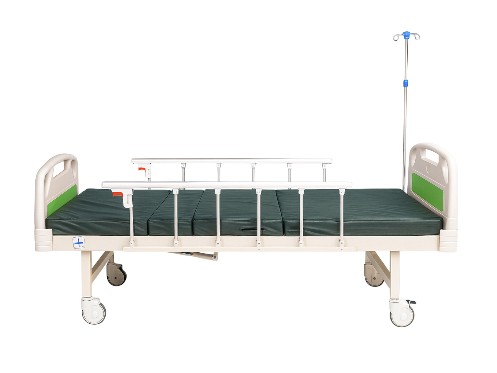
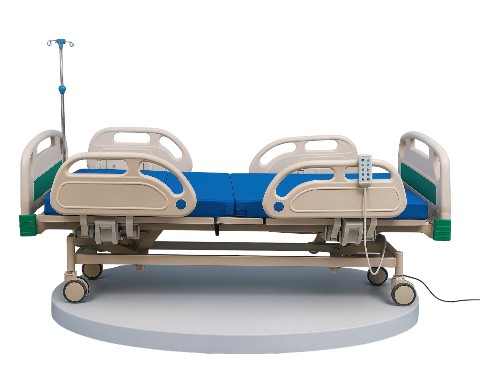
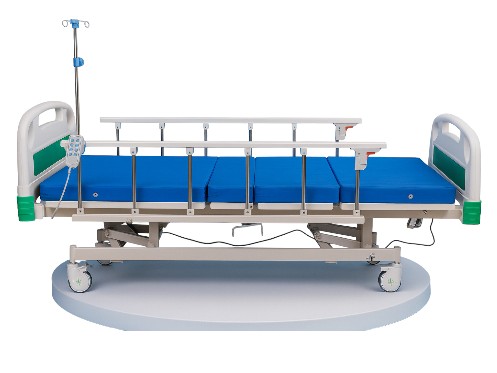
Our technician sets up the bed in the agreed position, connects the oxygen or the monitor, programs the prescribed settings and demonstrates the alarm limits.
Do the handover with the caregiver and the technician in the room. The technician should demonstrate, the caregiver should repeat. That is the difference between a demonstration and a handover.
Before the van leaves, check that the invoice, the rental start date and the 24/7 number are all written down somewhere the caregiver will find them.
The first 72 hours
Expect more calls in the first three days than in the following three months. Most of them are about the mask, the alarm tone or the tubing route, and all of them are easy to fix.
Write down the baseline vitals for the first three days. If a value drifts, the trend tells the doctor far more than a single reading.
Do not adjust prescribed settings to "improve" a reading without speaking to the doctor. An oxygen concentrator turned up a little is a common and dangerous instinct.
Red flags to escalate immediately
Rising oxygen requirement, increasing breathlessness at rest, a new confusion or altered behaviour, a fever with chest symptoms, or a saturated reading that does not recover after repositioning.
For equipment problems - no suction, a machine that will not start, a tripped power supply - call the 24/7 helpline rather than the hospital, unless the patient is unwell.
Keep the discharge summary at the bedside. It is the single most useful document in the room.
Frequently asked questions
As soon as the discharge date is confirmed, ideally the day before. Same-day delivery is possible for orders confirmed before 4 PM, but booking a day ahead guarantees the slot.
The written medication list, the equipment settings and protocols, the alarm limits, the wound or drain care instructions, the follow-up date and the number to call for escalation.
Need help choosing equipment?
Our team can help you select the right machine based on your doctor’s advice, the patient condition and the rental duration. Call +91 92242 82405 and we will talk it through.